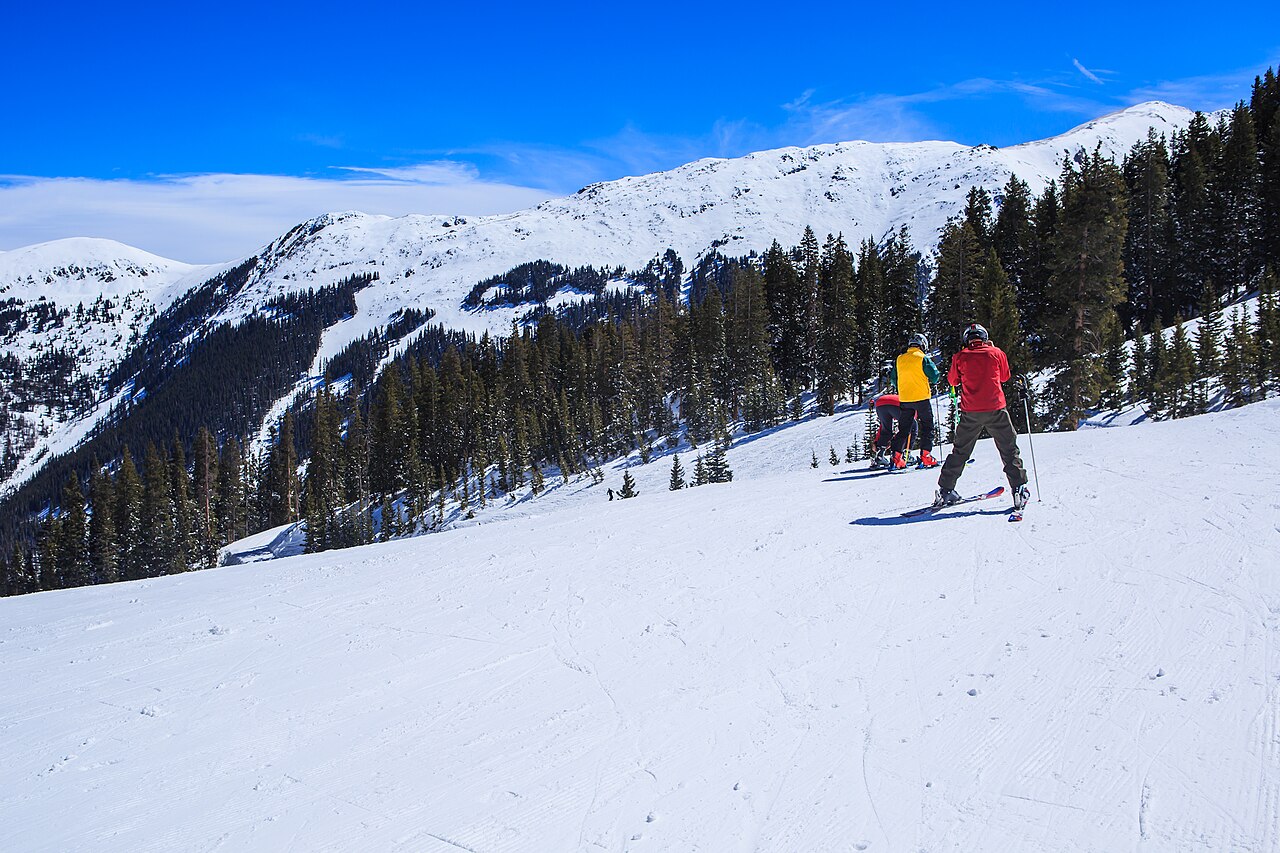
Taos Ski Valley is northern New Mexico's legendary steep-skiing mountain, founded by Swiss-German émigré Ernie Blake in 1955 and still radiating a one-of-a-kind Bavarian-meets-Southwest character. More than half its 1,294 acres are rated expert, crowned by the Kachina Peak lift to 12,481 feet and the hike-to chutes of Highline and West Basin Ridges, all served by famously short lift lines and dry desert-mountain powder.
Terrain Breakdown
Mountain Stats
Highlights
Pros
- ✓Sustained in-bounds steeps and chutes that genuinely challenge expert skiers
- ✓Short lift lines even in peak season - a fraction of the crowds at Colorado Ikon stops
- ✓Light, dry Southern Rockies snow paired with abundant New Mexico sunshine
- ✓One of the most respected ski schools in America for breakthrough progression
Cons
- ✗Expert-heavy trail map can overwhelm true beginners and cautious intermediates
- ✗Snowfall is streaky - the Southern Rockies see boom-and-bust seasons
- ✗Remote location: about 2.5 hours from Albuquerque, with limited flights to Taos itself
- ✗9,200-foot base elevation hits unacclimatized visitors hard
Skier Insightssummarized from Reddit and ski forums
Taos is the mountain skiers describe with the word 'soul' more than any other in America. Ernie Blake carved it out of New Mexico's Sangre de Cristos in 1955, and the personality survived the Louis Bacon-era modernization: a Swiss-German ski school ethos, green chile at 9,200 feet, family-style dinners at the St. Bernard, and a trail map where over half the terrain is honestly rated expert. The community consensus is striking in its consistency - people don't say Taos is fun, they say it made them better.
What that means on snow: the frontside is dominated by Al's Run's relentless mogul field, the real treasures are the hike-to chutes along Highline and West Basin Ridges (a 20-45 minute bootpack that gatekeeps beautifully), and Kachina Peak's lift serves 12,481-foot alpine when the wind allows - which is far from always. Crowds are the dog that doesn't bark; even holiday weeks rarely produce real lift lines, so untracked snow lasts days after storms. The honest caveats are snow volatility - Southern Rockies winters swing hard, and a dry spell here means firm bumps rather than groomer cruising - plus a small beginner footprint and a remote location that keeps day-trippers away but makes travel planning matter.
Taos suits advanced and expert skiers, mogul devotees, and improvers willing to commit to a Ski Better Week; it is a poor match for groups needing broad intermediate cruising or big-resort amenities. Value is strong for what you get - and the 2025-26 change to unlimited, no-blackout access on the full Ikon Pass (plus Mountain Collective days) removed the old day-count math entirely. Stay slopeside at the Blake or St. Bernard if budget allows, or in Taos town for art, food, and cheaper beds. Its closest spiritual rivals are Jackson Hole and Alta: less snow than either, but emptier ridgelines, a stranger and warmer culture, and a green-chile cheeseburger at the end of the bootpack.
What skiers like
- +The ridge culture is the draw: bootpack Highline or West Basin Ridge and you're dropping controlled in-bounds chutes that ski like Jackson's - with a fraction of the competition for lines
- +Lift lines barely exist even at Christmas - skiers routinely report ski-on chairs while Colorado Ikon stops an hour north are running 30-minute waits
- +As of 2025-26 the full Ikon Pass gets unlimited days at Taos with no blackouts - a quiet upgrade that makes it viable as an actual home mountain, not just a side trip
- +Al's Run's seed-to-summit mogul field under Lift 1 is a rite of passage - locals judge your week by how many top-to-bottom laps you survived
- +Ernie Blake Snowsports School's week-long Ski Better Weeks have a cult following - adults regularly call it the week their skiing permanently changed
- +Southern Rockies snow is genuinely dry - when storms do connect, the combination of light density and cold north-facing terrain skis far better than the 300-inch average suggests
- +The Bavarian-meets-New-Mexico culture is unreplicable: green chile on the mountain, the Hotel St. Bernard's family-style dinners, the Martini Tree, and art-town Taos 30 minutes below
- +Kachina Peak's lift puts 12,481ft hike-quality terrain five minutes from the base area when it's open - steep, high, and consequential
Common complaints
- −Snowfall is streaky boom-or-bust - the Southern Rockies can go weeks between storms, and a bad year here is worse than a bad year in Utah or Colorado
- −The Kachina Peak lift is notorious for wind holds and late-season openings - plenty of visitors never get to ride it at all
- −More than half the mountain is expert terrain, and the ratings are honest - cautious intermediates run through the blue runs quickly and true beginners are confined to a small zone
- −Getting there is a haul: 2.5+ hours from Albuquerque, a small regional airport in Taos with limited flights, and a winding final climb that ices up
- −The 9,207ft base means altitude hits on day one, and the hike-to ridges above 12,000ft punish the unacclimatized
- −On-mountain and base dining is limited - this is not a resort with fifteen lunch options, and the village goes quiet early
- −Aging lift infrastructure outside the main upgrades means some slow rides, and terrain closures concentrate skiers when coverage is thin
- −Lodging at the base is expensive and scarce; staying in Taos town saves money but adds a 30-40 minute mountain-road commute each way
Common Questions
How many days do I get at Taos on the Ikon Pass?
Is Taos too hard for intermediates?
When is the best time to ski Taos?
How do the ridge hikes work - do I need gear?
Is Taos worth it in a low-snow year?
Should I stay at the ski valley or in Taos town?
Photo: Murray Foubister / Wikimedia Commons (CC BY-SA 2.0)
← Back to All Resorts