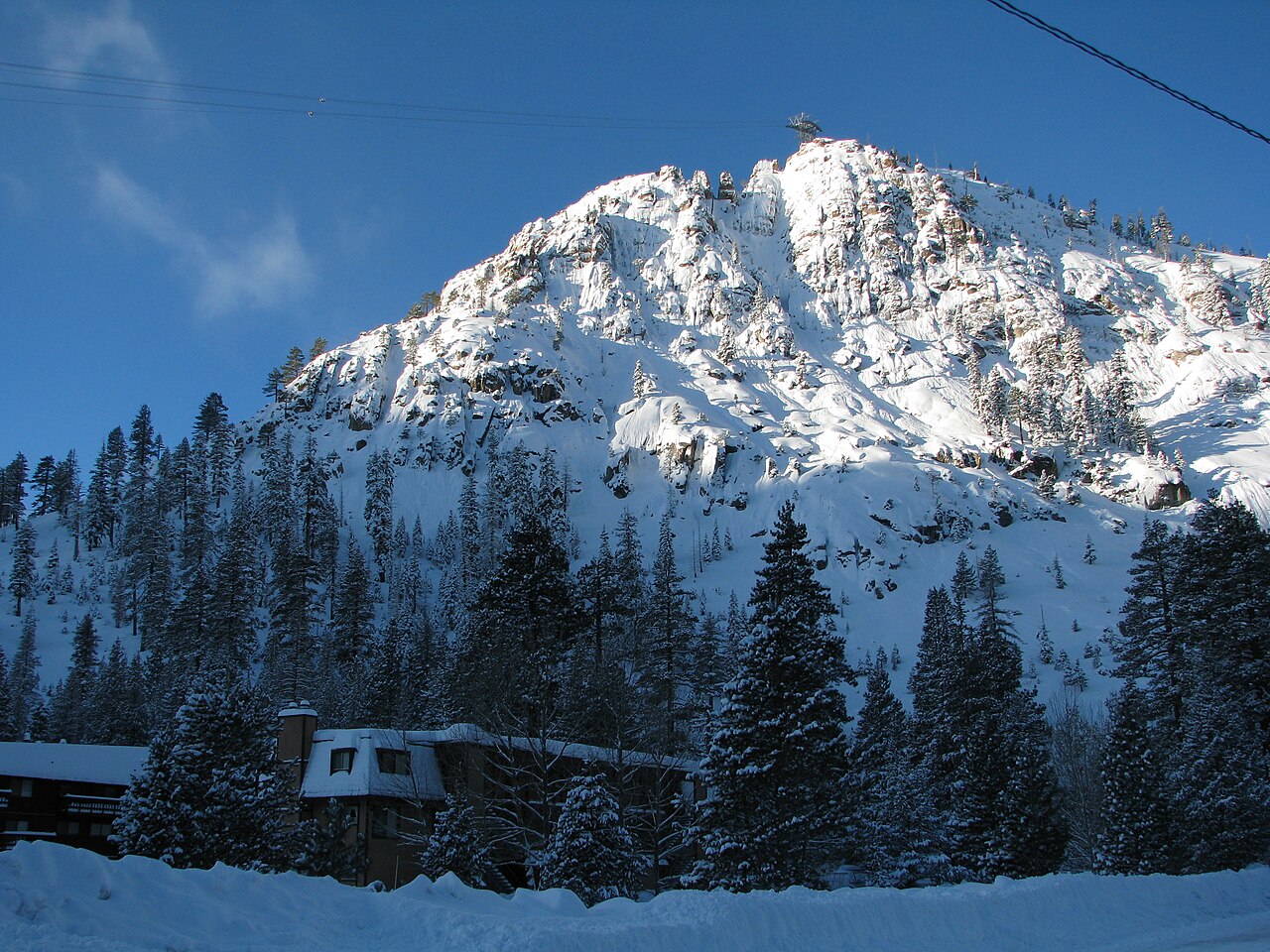
Palisades Tahoe (formerly Squaw Valley) combines two mountains - Palisades and Alpine Meadows - into 6,000 acres linked by a base-to-base gondola, making it the largest ski area in California. Host of the 1960 Winter Olympics and home mountain of American extreme skiing, it's famous for KT-22's steeps, huge Sierra storm totals, and spring skiing that regularly runs into late May.
Terrain Breakdown
Mountain Stats
Highlights
Pros
- ✓Legendary steep terrain off KT-22, Granite Chief, and the Palisades
- ✓Two distinct mountains double the variety on storm or sunny days
- ✓Massive snow years and a season that stretches toward Memorial Day
- ✓Strong intermediate cruising at Alpine Meadows away from the scene
Cons
- ✗Heavy 'Sierra cement' snow when storms come in warm
- ✗Brutal weekend crowds and I-80 traffic from the Bay Area
- ✗Frequent wind holds on upper mountain lifts during storms
- ✗Modest 2,850 ft vertical for a resort of its stature
Skier Insightssummarized from Reddit and ski forums
Palisades Tahoe carries the swagger of American freeskiing's birthplace, and the terrain backs it up — KT-22 alone would justify the reputation, a single chairlift serving more legitimate expert lines than many entire resorts. Community sentiment splits along a predictable seam: skiers rave about the mountain and grumble about everything around it, from Bay Area crowds to wind holds to the price of a base-village beer. The 2021 renaming and Alterra's investment era (base-to-base gondola, lift upgrades) modernized the place without dulling its edge.
The practical experience depends enormously on timing. Midweek powder days are among the best in the country: KT, Granite Chief, and Silverado cycling through storm snow, Alpine Meadows' bowls open across the gondola, nobody in line. Weekends invert the equation — I-80 traffic, morning parking reservations, and a KT queue that can hit an hour force strategy: arrive before 8, start at Alpine, use the gondola to chase open lifts. Wind is the other governor; the upper mountain holds regularly during storms, and reading the lift-status page before leaving Truckee is a learned local reflex. Snow runs heavier than the Rockies — Sierra cement is real — but the volume compensates, and the maritime base means spring corn seasons that run into May.
It's best as an Ikon home mountain for strong Tahoe-based or Bay Area skiers who can pick their days, and as a destination for experts who want KT on their resume. Beginners and intermediates get a better experience on the Alpine side or at Northstar. Costs are Tahoe-premium: lodging in Olympic Valley is steep, Truckee is the value-and-charm play, and day tickets past $289 make the Ikon Pass the only rational entry. Against Heavenly or Northstar it's not really a comparison — this is the serious skier's Tahoe mountain, crowds and all.
What skiers like
- +KT-22 remains the most concentrated expert pod in American skiing — chutes, cliff bands, and fingers in every direction straight off one chair, which is why locals call it the mothership
- +Two genuinely different mountains on one ticket: when the Palisades side turns into a scene, Alpine Meadows skis quieter with its own bowls and sun-soaked Sherwood side
- +Big Sierra winters are measured in feet — 500-700 inch seasons happen, building the deepest base in the country and burying everything rideable
- +Spring skiing stretches toward Memorial Day in good years, with Shirley Canyon corn laps and a party atmosphere nobody else in Tahoe matches
- +Unlimited access on the full Ikon Pass — as Alterra's flagship, it's the natural West Coast home mountain for Ikon holders
- +The base-to-base gondola actually changed trip logistics: storm-day flexibility between valleys without moving the car
- +Granite Chief and Silverado hold soft snow and smaller crowds days after KT is tracked out
- +The freeski history is ambient — this is the birthplace of American extreme skiing, and you still see pros filming lines above the KT chair
Common complaints
- −Bay Area weekend migration is the defining problem — I-80 stacks up Friday night and Saturday morning, and the mountain absorbs thousands of day-trippers
- −Wind holds are notorious: the upper mountain shuts regularly in storms, sometimes leaving only lower lifts spinning on what should be the best days
- −Warm Pacific storms deliver Sierra cement — heavy, wet snow that punishes soft boots and skinny skis, a different sport from Utah blower
- −KT-22's line on a powder Saturday runs 45-60 minutes; the terrain is world-class, the queue culture around it less so
- −Weekend and holiday parking requires morning reservations now — showing up at 9am without one can mean being turned away
- −Rain to the 6,200-foot base is a real risk in warm storms, especially early and late season
- −The Palisades side frustrates intermediates — flats around Gold Coast, traverses between zones, and the best terrain skewed hard toward experts
- −Olympic Valley lodging and dining price like a luxury resort; value means commuting from Truckee or Reno
Common Questions
How bad are the crowds really, and how do I avoid them?
Is Palisades unlimited on the Ikon Pass?
What's the deal with wind holds?
Palisades side or Alpine Meadows side — where should I ski?
When is the best time to ski Palisades Tahoe?
Is the snow really that heavy compared to Utah or Colorado?
Photo: Rennett Stowe / Wikimedia Commons (CC BY 2.0)
← Back to All Resorts