Asia
Niseko United
For 2026-27, Niseko United is on the Ikon Pass (7 days) and the Mountain Collective (2 days). Lifts run from 853 ft (260 m) to 3,937 ft (1,200 m), a vertical drop of 3,084 ft (940 m) across 2,191 acres, with about 590 inches of snow a year.
Niseko United combines four interconnected resorts (Grand Hirafu, Hanazono, Niseko Village, and Annupuri) on Mt. Niseko Annupuri in Hokkaido, sharing a single all-mountain pass. It is the world's most famous powder destination, averaging around 15 meters (590 inches) of exceptionally light, dry snow each season. Beyond the legendary tree skiing and backcountry gates, it offers extensive night skiing and a vibrant international resort scene.
Ski passes at Niseko United, 2026-27
| Pass | Access | Details |
|---|---|---|
| Ikon Pass | 7 days | Full Ikon Pass = 7 days combined across all four Niseko United resorts; Ikon Base Pass = 5 days combined with blackouts; Ikon Session Pass days (2-4) also work. Days are redeemed as All-Mountain passes at any of the four ticket counters with a photo ID, no reservation needed. |
| Mountain Collective | 2 days | Two free All-Mountain days with no blackouts, then 50% off additional All-Mountain day tickets that season; pick up at any of the four base-area counters. |
Not on the Epic Pass or Indy Pass this season.
The Niseko United All-Mountain pass covers all four resorts (Grand Hirafu, Hanazono, Niseko Village, Annupuri) including night skiing. The 2026-27 adult All-Mountain season pass is JPY 184,400; a 50-hour pass (online only) is JPY 121,200.
Lift ticket prices
Peak walk-up adult day ticket, 2026-27: ¥13,500 (about $92); online in advance from around ¥6,300. Fixed seasonal pricing for the All-Mountain 1-day: JPY 13,500 peak (24 Dec 2026 - 28 Feb 2027), JPY 12,600 regular, JPY 8,800 early/spring and JPY 6,300 in the final season (5 Apr - 5 May 2027); an all-day ticket stays valid through night skiing.
Terrain Breakdown
Niseko United elevation, altitude and mountain stats
Peaks and base areas
| Peak | Mt. Niseko Annupuri summit — Hike-to only, reached through the backcountry gates above the top lifts | 4,291 ft (1,308 m) |
| Peak | Top of Grand Hirafu lifts — Highest lift-served point | 3,937 ft (1,200 m) |
| Base | Grand Hirafu base | 853 ft (260 m) |
Highlights
Pros
- ✓Unmatched volume of consistent, ultra-light powder
- ✓Extensive night skiing under floodlights
- ✓Excellent, well-managed sidecountry access gates
- ✓Great gladed tree skiing for all levels
- ✓On the Ikon Pass with international amenities and dining
Cons
- ✗Modest vertical drop and relatively short runs
- ✗Frequent flat light and storms reduce visibility
- ✗Crowded and increasingly expensive during peak January
Quick answers
Is Niseko United on the Epic Pass?
No. Niseko United is not on the Epic Pass for 2026-27. It is on the Ikon Pass (7 days) and the Mountain Collective (2 days) instead.
Is Niseko United on the Ikon Pass?
Yes. For the 2026-27 season the Ikon Pass includes 7 days at Niseko United. Full Ikon Pass = 7 days combined across all four Niseko United resorts; Ikon Base Pass = 5 days combined with blackouts; Ikon Session Pass days (2-4) also work. Days are redeemed as All-Mountain passes at any of the four ticket counters with a photo ID, no reservation needed.
Is Niseko United on the Mountain Collective?
Yes. For the 2026-27 season the Mountain Collective includes 2 days at Niseko United. Two free All-Mountain days with no blackouts, then 50% off additional All-Mountain day tickets that season; pick up at any of the four base-area counters.
What is the elevation of Niseko United?
Niseko United sits at an altitude of 853 ft (260 m) at the base and 3,937 ft (1,200 m) above sea level at the top of the lifts, for 3,084 ft (940 m) of vertical drop. Named peaks and lift tops: Mt. Niseko Annupuri summit at 4,291 ft (1,308 m) and Top of Grand Hirafu lifts at 3,937 ft (1,200 m).
How big is Niseko United?
Niseko United has 2,191 acres, 30 lifts and 73 runs.
How much snow does Niseko United get?
About 590 inches (1,499 cm) a year on average, as reported by the resort.
How much is a lift ticket at Niseko United?
A walk-up adult day ticket peaks at ¥13,500 (about $92) for the 2026-27 season. Buying online ahead, adult tickets have started around ¥6,300. Fixed seasonal pricing for the All-Mountain 1-day: JPY 13,500 peak (24 Dec 2026 - 28 Feb 2027), JPY 12,600 regular, JPY 8,800 early/spring and JPY 6,300 in the final season (5 Apr - 5 May 2027); an all-day ticket stays valid through night skiing.
When does Niseko United open for the season?
Scheduled for 2026-27: opening 2026-11-28 (tentative), closing 2027-05-05 (tentative). Dates move with snowfall, so check the resort before booking.
When is night skiing at Niseko?
Night skiing runs 12 December 2026 to 22 March 2027 (tentative) at the Niseko United resorts, and a 1-day All-Mountain ticket stays valid until night skiing ends that evening.
Skier Insightssummarized from Reddit trip reports and ski forum reviews
Niseko is the world's most reliable powder factory, and the community consensus hasn't really changed: nowhere else combines this much snow — roughly 15 meters a season of cold Hokkaido smoke — with this much infrastructure to ski it. What has changed is the tone of the conversation. The skier take used to be pure awe; now it's 'still the best snow of my life, but book everything early and brace for the Hirafu scene.' The mountain itself remains the draw: birch glades that refill mid-day, managed gates opening real backcountry bowls, and night skiing that turns storm days into 12-hour sessions.
Practically, Niseko skis bigger than its 51km of marked runs because the gates are the point — the peak hike (when patrol opens it) and gate-accessed bowls are where strong skiers spend their week. Inbounds pitch is gentle enough that beginners and intermediates have a genuinely great time in the trees, which is rare for a powder destination. The four resorts share a pass and an interlinked ridgeline: locals bounce to Annupuri when storms flatten the light and to Hanazono for the deepest tree stashes. Crowds concentrate brutally at the Hirafu gondola on storm mornings; being in line at first chair or simply starting at a different base solves most of it.
It's best for powder-obsessed skiers of any level who value snow quality over steepness, and for first-time Japan visitors who want easy logistics. The full Ikon Pass includes seven days, which covers a week trip nicely. Cost-wise it now rivals a Colorado destination week, and the value play is lodging in Kutchan rather than Hirafu. If the crowds grate, the community's standard advice applies: do a few days at Rusutsu or Kiroro — same snow, fraction of the scene — and keep Niseko for the night-skiing storm sessions it does better than anywhere.
What skiers like
- +January refills are near-daily — 30-60cm storm cycles mean the trees ski bottomless again by the afternoon after being tracked at 9am
- +Night skiing at Grand Hirafu is a legitimate second session, not a gimmick — lapping fresh powder under lights while it's still snowing is the thing people fly back for
- +The numbered gate system (G1-G11) makes sidecountry access sane: patrol-managed gates open real bowls and tree lines that funnel back to lifts
- +Four resorts on one pass rewards storm strategy — Annupuri for visibility and mellower trees, Hanazono for the deepest glades, Hirafu for terrain density
- +Logistically the easiest Japan powder trip there is: English signage, international ski schools, direct buses from New Chitose
- +Food runs from 900-yen ramen huts on the hill to genuinely great izakayas in Kutchan, a short train or cab from the circus
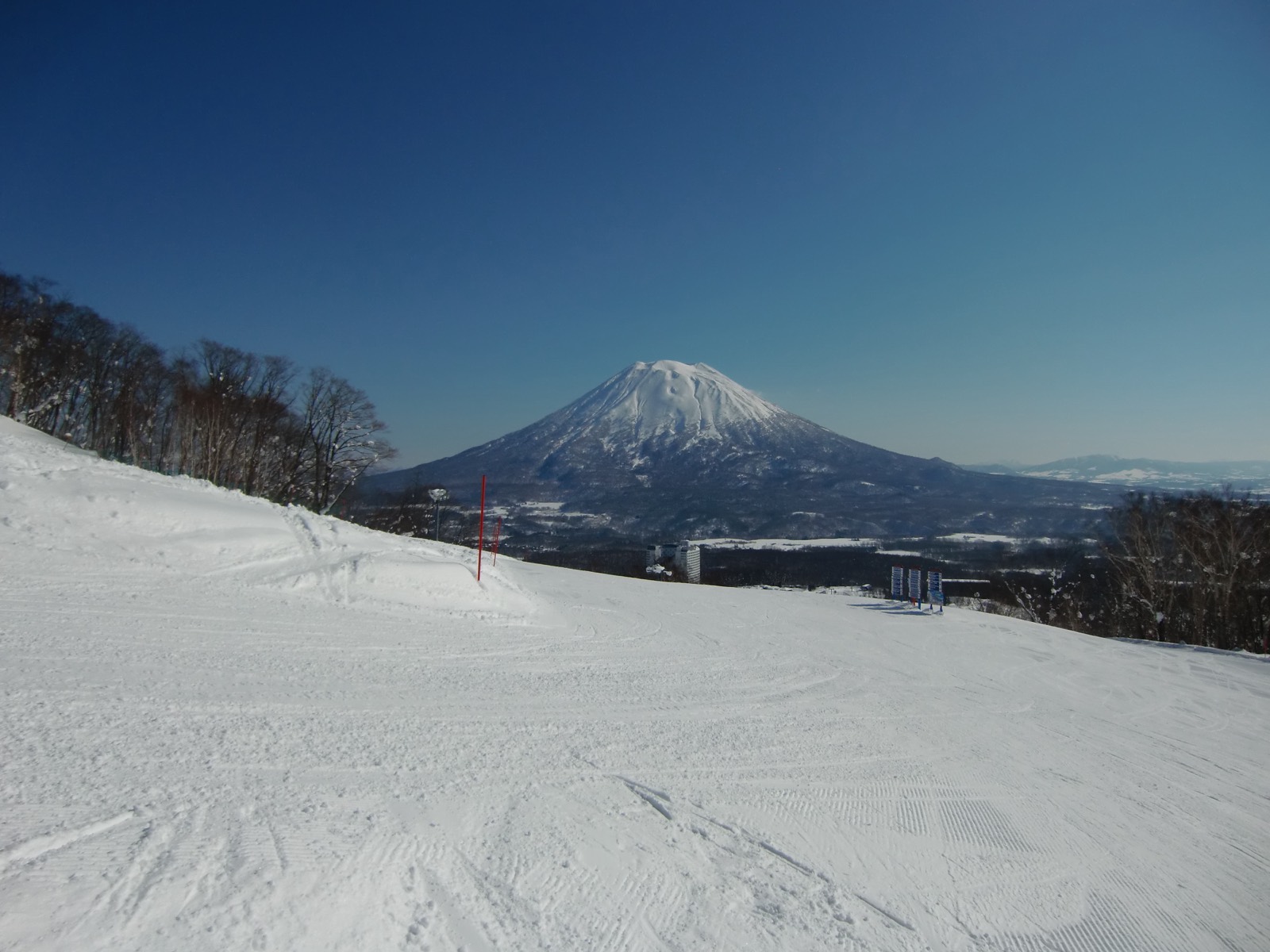
- +The Mt. Yotei view on a rare bluebird morning is one of skiing's best backdrops — a perfect Fuji-shaped volcano across the valley
- +March is the insider move: crowds evaporate, the base is at its 3m+ deepest, visibility improves, and the snow stays cold
Common complaints
- −Powder-morning gondola queues at Hirafu run 30-45 minutes and the lift-line discipline is chaotic — no real singles line, lots of drift
- −Peak January dinner reservations need booking weeks out, and taxis in Hirafu are functionally unavailable at night
- −The cheap-Japan-trip era is over — lift tickets, lodging, and dining have climbed toward Western resort pricing, and the yen advantage gets eaten fast in Hirafu
- −Flat light is the default during storm cycles; you can go four or five days without seeing the terrain you're skiing
- −The vertical is modest and the pitch mostly mellow — skiers raised on Jackson or Snowbird steeps get restless inbounds and live in the gates
- −Hirafu can feel like an Australian beach town in a blizzard — English everywhere, Western prices, and not much Japan in the resort bubble
- −Chinese New Year (mid-February in 2026) brings a second crowd surge that books out lodging months ahead
- −Wind holds shut the upper lifts and peak gates regularly — some weeks the alpine never opens at all
Common Questions
Is Niseko too crowded now? Should I go to Rusutsu instead?
When is the best time to ski Niseko?
Is Niseko good for beginners and intermediates?
Is the night skiing actually worth it?
Do I really need dinner reservations in Hirafu?
Pass and ticket details checked 2026-09-30. Sources: niseko.ne.jp, niseko.ne.jp, niseko.ne.jp, en.grand-hirafu.jp, en.wikipedia.org, ikonpass.com, headless.skimag.com, saminfo.com
Photo: Excellent moniteur de ski / Wikimedia Commons (CC BY-SA 4.0)
← Back to All Resorts