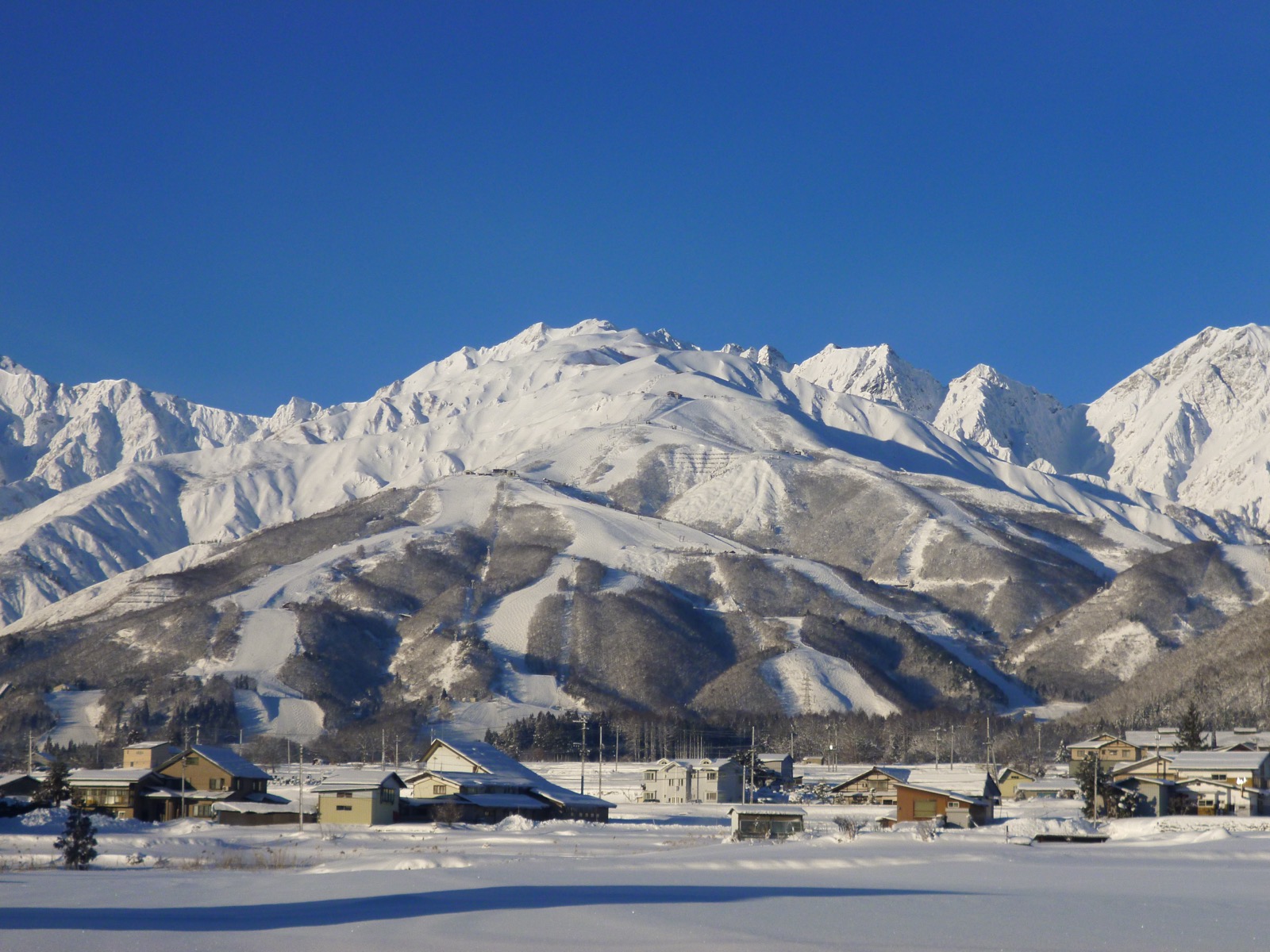
Hakuba Valley strings ten resorts beneath the 3,000-meter peaks of Japan's Northern Alps, all covered by a single valley pass and shuttle network. Host of the 1998 Nagano Olympics, it pairs the deep, frequent snowfall Japan is famous for with legitimately steep, big-mountain terrain - Happo-One alone has 1,071 meters of vertical - making it the alpine counterpart to Niseko's mellow tree runs.
Terrain Breakdown
Mountain Stats
Highlights
Pros
- ✓Steeper, bigger terrain than Hokkaido's famous powder resorts
- ✓Deep January-February powder plus renowned backcountry gates
- ✓Day tickets around ¥10,400 (~$67) - a bargain by western standards
- ✓Huge variety - ten resorts suit every ability and crowd tolerance
- ✓Night skiing at Hakuba Goryu and a lively international village scene
Cons
- ✗Resorts are spread along the valley and require shuttle buses
- ✗Snow is heavier and less consistent than Hokkaido's
- ✗Upper alpine terrain frequently closes in storms and wind
- ✗Peak-season crowds and rising prices in the main villages
Skier Insightssummarized from Reddit and ski forums
Hakuba is the Japan trip for skiers who find Niseko too flat and too much like an Australian suburb. Ten resorts string along a valley beneath legitimately alpine 3,000-meter peaks - the 1998 Nagano Olympics ran here - and the mix is unique: Japanese snowfall volumes on terrain with European-style steepness. The community's shorthand is that Hokkaido gets lighter snow but Hakuba gets better mountains, and every Japan-trip-planning thread eventually lands on that trade.
The practical experience depends on reading the weather. Storm days send everyone to the trees - Cortina's steep beech glades are the crown jewel, with a queue scene to match - while clear days after a storm are for Happo-One's long ridgeline runs and the backcountry gates above them. Beginners and intermediates are better served than Hakuba's expert reputation suggests: Goryu, Iwatake (with its new gondola and photogenic summit cafe), and Tsugaike have huge mellow zones, and lessons cost far less than in the US. The frustrations are structural - shuttle buses instead of connecting lifts, wind holds on the alpine, and aging uphill capacity at Happo that won't be fixed until the new gondola opens for the 2027-28 season.
Go in mid-January through February for the deepest, most reliable snow; December is a gamble and March turns spring-like but quiet. Epic Pass holders get 5 consecutive days, which combined with ~$67 walk-up tickets makes this one of skiing's great value plays even after the post-COVID price creep. Stay in Happo village for convenience and nightlife, Echoland for the bar scene, or near Cortina if dawn-patrol powder is the whole point. Compared to Niseko: steeper, cheaper, more Japanese in feel, slightly heavier snow, and a valley layout that rewards renting a car or mastering the shuttle timetable.
What skiers like
- +Terrain with actual consequence - Happo-One's ridgelines and the valley's backcountry gates offer steeps that Niseko simply doesn't have, which is why serious skiers pick Hakuba for their Japan trip
- +Cortina's tree skiing on a storm day is a bucket-list experience - steep, perfectly spaced beech forest that regulars compare to a lift-served cat operation
- +Ten resorts on one valley pass means a storm strategy: wind-holding at Happo? Bail to tree-sheltered Cortina or Iwatake and salvage the day
- +Around ¥10,400 (~$67) for a day ticket, sub-$10 katsu curry on-mountain, and quality lodging for a fraction of Colorado prices - the yen still goes far
- +Epic Pass holders get 5 consecutive days included, which can effectively pay for the pass on a single Japan trip
- +The Northern Alps backdrop is legitimately dramatic - 3,000m peaks that make the valley feel more like Chamonix than the rolling volcano terrain up in Hokkaido
- +Night skiing at Goryu and lively international izakaya/bar scenes in Happo and Echoland keep evenings interesting without Niseko's party-town excess
- +January-February refresh rates are absurd - multi-week trips report powder more mornings than not, with 10m+ falling over the season
Common complaints
- −The Cortina powder-day scrum is now infamous - a single slow gondola and half the valley's powder hounds converging means queues from before opening
- −Happo's upper mountain goes on wind hold constantly during storms, exactly when you want the alpine - the best terrain and the best snow rarely coincide
- −Snow is heavier and less consistent than Hokkaido's - warm-ups and rain-to-ridgetop events happen in a way Niseko regulars aren't used to
- −The valley is genuinely spread out: resorts are linked by shuttle bus, not lifts, and the buses pack out at powder-morning and end-of-day peaks
- −Post-COVID international crowds have surged - January now brings Australian and Western holiday traffic that has doubled queues and made dinner reservations mandatory
- −Happo's workhorse Adam gondola dates to 1983 and shows it - the capacity fix (a new 10-person gondola) doesn't arrive until December 2027
- −Patrol and rope policies vary confusingly between the ten resorts - what's tolerated at one area gets your pass pulled at another
- −Off-season-style infrastructure gaps: limited English-friendly childcare, and some smaller resorts still run cash-only lunch counters
Common Questions
Is Hakuba on the Epic Pass or Ikon Pass?
Hakuba or Niseko - which should I choose?
When is the best time to visit Hakuba?
How do I handle a powder day at Cortina without the crowd?
Is Hakuba good for beginners and intermediates?
Do I need a car in Hakuba?
Photo: Ski Mania / Wikimedia Commons (Public domain)
← Back to All Resorts