Europe
Val d'Isère
Val d'Isère is not on the Epic, Ikon, Mountain Collective or Indy pass for 2026-27. Lifts run from 5,085 ft (1,550 m) to 11,339 ft (3,456 m), a vertical drop of 6,253 ft (1,906 m) across 300 km pistes, with about 229 inches of snow a year.
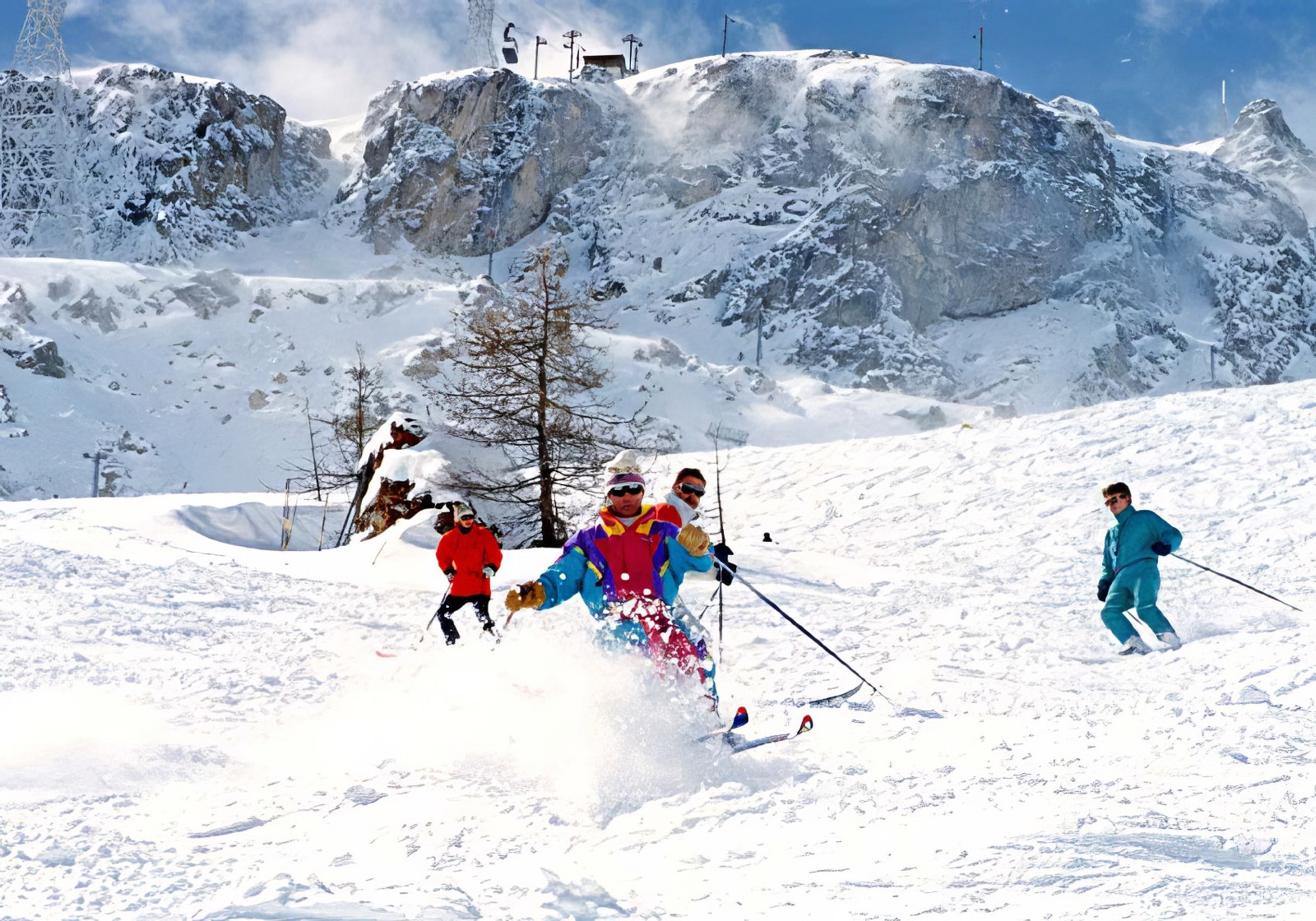
Val d'Isère links with neighbouring Tignes to form the vast Espace Killy / Tignes-Val d'Isère domain, one of the largest and most snow-sure ski areas in France with around 300km of pistes between 1,550m and 3,456m. The high altitude and two glaciers give excellent snow reliability and a long season, while the terrain spans gentle cruising and serious steeps like the Face de Bellevarde.
Ski passes at Val d'Isère, 2026-27
Not on the Epic Pass, Ikon Pass, Mountain Collective or Indy Pass this season.
Val d'Isère is not on any US multi-resort pass for 2026-27 (it is absent from the Ikon destinations list and Epic's European partner list). The existing page highlight 'On the Ikon Pass for international skiers' is wrong and should be removed.
The Tignes-Val d'Isère pass (the old 'Espace Killy') covers both resorts' 300 km, including the Grande Motte and Pissaillas glaciers. 2026-27 adult season pass is listed at EUR 899 on skiinfo.fr; the 2025-26 season pass was EUR 1,125 per bergfex, so confirm the 2026-27 figure on valdisere.ski before publishing.
Lift ticket prices
Peak walk-up adult day ticket, 2026-27: €78 (about $91). Seasonal (not dynamic) pricing with cheaper Opening/Closing periods (2025-26 shoulder days were EUR 64); a 6-day pass is EUR 468 with a 7th day free, and a Tignes-only day is EUR 70.
Terrain Breakdown
Val d'Isère elevation, altitude and mountain stats
Peaks and base areas
| Peak | Grande Motte glacier (Tignes side) — Highest lift-served point of the Tignes-Val d'Isère domain, reached by the Grande Motte funicular + cable car | 11,339 ft (3,456 m) |
| Base | Val d'Isère village | 6,070 ft (1,850 m) |
| Base | Tignes-Les Brévières (lowest point of domain) | 5,085 ft (1,550 m) |
Highlights
Pros
- ✓Huge 300km linked area shared with Tignes
- ✓Excellent snow reliability thanks to high altitude and glaciers
- ✓One of the longest seasons in the Alps (late Nov to early May)
- ✓Lively, attractive resort village with strong dining and nightlife
Cons
- ✗Lift queues can build at peak times and key bottlenecks
- ✗Premium pricing on lodging and dining
- ✗Genuinely flat beginner terrain is limited near the village
- ✗Access requires a transfer from Bourg-Saint-Maurice (~30km)
Quick answers
Is Val d'Isère on the Epic Pass?
No. Val d'Isère is not on the Epic Pass for 2026-27. It is not on any of the big multi-resort passes; skiing here means a day ticket or the resort's own pass. Val d'Isère is not on any US multi-resort pass for 2026-27 (it is absent from the Ikon destinations list and Epic's European partner list). The existing page highlight 'On the Ikon Pass for international skiers' is wrong and should be removed.
Is Val d'Isère on the Ikon Pass?
No. Val d'Isère is not on the Ikon Pass for 2026-27. It is not on any of the big multi-resort passes; skiing here means a day ticket or the resort's own pass. Val d'Isère is not on any US multi-resort pass for 2026-27 (it is absent from the Ikon destinations list and Epic's European partner list). The existing page highlight 'On the Ikon Pass for international skiers' is wrong and should be removed.
What is the elevation of Val d'Isère?
Val d'Isère sits at an altitude of 5,085 ft (1,550 m) at the base and 11,339 ft (3,456 m) above sea level at the top of the lifts, for 6,253 ft (1,906 m) of vertical drop. Named peaks and lift tops: Grande Motte glacier (Tignes side) at 11,339 ft (3,456 m).
How big is Val d'Isère?
Val d'Isère has 300 km pistes, 71 lifts and 161 runs.
How much snow does Val d'Isère get?
About 229 inches (582 cm) a year on average, as reported by the resort.
How much is a lift ticket at Val d'Isère?
A walk-up adult day ticket peaks at €78 (about $91) for the 2026-27 season. Seasonal (not dynamic) pricing with cheaper Opening/Closing periods (2025-26 shoulder days were EUR 64); a 6-day pass is EUR 468 with a 7th day free, and a Tignes-only day is EUR 70.
When does Val d'Isère open for the season?
Scheduled for 2026-27: opening 2026-11-28 (Tignes from 2026-11-21), closing 2027-05-02. Dates move with snowfall, so check the resort before booking.
What is the altitude of Val d'Isère?
The village sits at 1,850 m (6,070 ft). The linked Tignes-Val d'Isère ski area runs from 1,550 m at Les Brévières up to 3,456 m on the Grande Motte glacier, so most skiing is above 1,800 m.
How much is a Val d'Isère ski pass?
A 2026-27 adult day pass for the whole Tignes-Val d'Isère area is EUR 78 in main season, and six days cost EUR 468 with a seventh day free. Val d'Isère is not on the Epic, Ikon, Mountain Collective or Indy passes, so you buy the local pass.
Skier Insightssummarized from Reddit trip reports and ski forum reviews
Val d'Isère, linked with Tignes into a ~300km high-altitude circus, is the resort European skiers name when asked where to burn a full week of piste mileage without worrying about snow. Almost everything skis above 2,300m, glaciers cap both ends of the domain, and the season runs honestly from late November into May — the structural advantages that made this valley the France default for British and Scandinavian skiers. The town itself is handsomer than most French purpose-builts, an old stone core wrapped in chalet-style development, with an après scene (Folie Douce on-mountain, Dick's Tea Bar at 2am) that punches at Austrian weight.
The on-snow experience rewards ambition. Intermediates own this place: endless above-treeline reds and blues, the Fornet and Pissaillas glacier sectors, and long descents like the OK World Cup run at La Daille. Experts hire guides and disappear into some of the most celebrated lift-accessed off-piste in the Alps — Tour du Charvet, Cugnaï, the Fornet backside — where a single lift ride buys a thousand meters of wild terrain. Beginners get a mixed deal that trips up trip-planners: the village nursery slopes are excellent and free, but graduating means confronting home runs (La Face's icy afternoon moguls, most infamously) that scare intermediates, so novices should embrace downloading. Crowds follow the European holiday calendar with precision — February half-terms are the crush; January and late March are the connoisseur windows. One planning gotcha: high winds close the exposed Tignes link, so storm weeks can halve the domain.
Who's it for? Mileage-hungry intermediates, off-piste skiers with guide budgets, and mixed groups who want reliable snow plus real nightlife. Nobody's megapass helps: Val d'Isère sits on neither Epic nor Ikon, so budget the full local lift pass alongside lodging that ranks just behind Courchevel as France's priciest. Against Chamonix it's the inverse trade — vastly more linked piste and better snow reliability, far less steep-skiing mystique. Against Zermatt, similar mileage and snow security at maybe 70% of the daily cost, minus the Matterhorn. Getting there means a ~3-hour Geneva transfer or the rail route to Bourg-Saint-Maurice, and the free Train Rouge shuttle makes the valley car-free once you arrive.
What skiers like
- +The linked Tignes-Val d'Isère area (the domain formerly branded Espace Killy) is ~300km of pistes between 1,550m and 3,456m — a full week of skiing without repeating yourself
- +Altitude makes it one of the most snow-sure destinations in the Alps: most of the skiing sits above 2,300m, with two glaciers backstopping early and late season
- +Lift-served off-piste is world-class and comparatively accessible — Tour du Charvet and the Fornet sector's backside bowls are half-day adventures with a guide
- +The season genuinely runs late November to early May, and April skiing up high is regularly excellent when lower French resorts have shut
- +Le Fornet's trees and high glacier bowls are the connoisseur's corner — quieter lifts, and the best storm-day skiing in the area
- +The village is attractive and walkable by French purpose-built standards, with the free Train Rouge shuttle covering the valley from La Daille to Le Fornet
- +Nursery slopes in the village center are free to use, a genuinely great touch for first-timers
- +Après is the best in France — La Folie Douce's afternoon madness on the mountain, Cocorico's at the base, and Dick's Tea Bar carrying it past midnight
Common complaints
- −Neither Epic nor Ikon covers it — despite what aggregator sites claim, you're buying a Tignes-Val d'Isère lift pass at full price (roughly €70-80/day), so megapass holders get no help here
- −The famous home runs are the beginner trap: La Face de Bellevarde and the Santons descent into the village turn icy and mogulled by afternoon, and plenty of intermediates ride the lift down without shame
- −February French school holidays plus the massive British market means brutal peak weeks — queues at La Daille's gondola and the L'Olympique can hit 20-30 minutes
- −It's the most expensive major French resort after Courchevel — chalet-board pricing, £8 pints, and mountain lunches that sting
- −The link to Tignes rides over high, exposed cols that close in storms and high wind, chopping the domain in half exactly when the snow is best
- −Much of the best terrain is genuinely high-consequence off-piste — without a guide you'll ski the same handful of groomed motorways as everyone else
- −Getting there is a slog: ~3 hours of mountain-road transfer from Geneva, or rail to Bourg-Saint-Maurice and still 30-45 minutes of switchbacks
- −The Brit-dominated seasonnaire scene gives parts of town a London-on-snow feel that charms some visitors and grates on others
Common Questions
Is it beginner-friendly? I've heard both yes and no.
When's the best time to go?
Do I need a guide for the off-piste?
Val d'Isère or Tignes as a base?
How do I get there without a car?
Pass and ticket details checked 2026-09-30. Sources: valdisere.com, valdisere.com, schneehoehen.de, skiinfo.fr, bergfex.at, snowcarbon.co.uk, ikonpass.com
Photo: Charles J. Sharp / Wikimedia Commons (CC BY-SA 4.0)
← Back to All Resorts