Europe
Cortina d'Ampezzo
For 2026-27, Cortina d'Ampezzo is on the Ikon Pass (7 days (via dolomiti superski)). Lifts run from 3,993 ft (1,217 m) to 9,278 ft (2,828 m), a vertical drop of 5,285 ft (1,611 m) across 120 km pistes, with about 126 inches of snow a year.
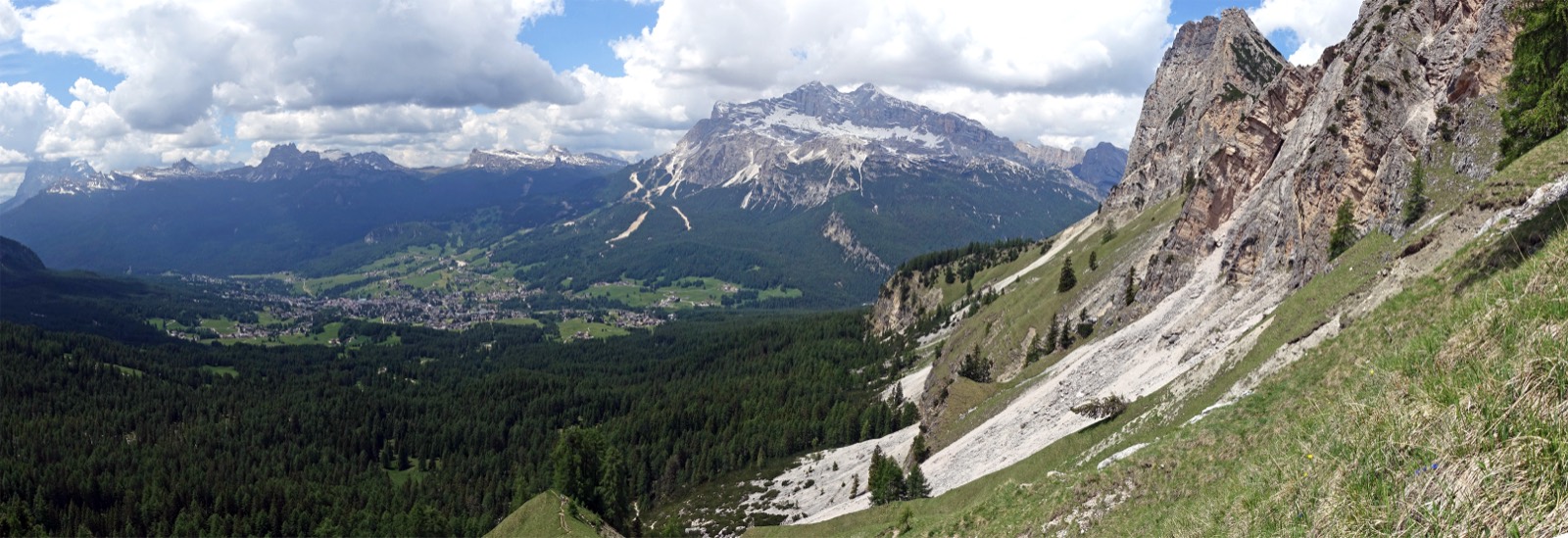
Cortina d'Ampezzo is a glamorous Dolomites resort set amid dramatic limestone peaks and part of the vast Dolomiti Superski network. Its 120km of mostly sunny, scenic pistes lean toward beginner and intermediate skiing, with famous runs like the Olimpia delle Tofane. Host of the 1956 and 2026 Winter Olympics, it blends top-tier skiing with upscale Italian style.
Ski passes at Cortina d'Ampezzo, 2026-27
| Pass | Access | Details |
|---|---|---|
| Ikon Pass | 7 days (via Dolomiti Superski) | Cortina is covered through Ikon's Dolomiti Superski destination, which counts as one destination across all 12 Dolomiti Superski areas: full Ikon Pass = up to 7 days, Ikon Base Pass = up to 5 days. SKI Magazine lists blackouts on the Base tier; confirm the Base blackout rules for Dolomiti Superski on ikonpass.com. |
Not on the Epic Pass, Mountain Collective or Indy Pass this season.
Buy either the Dolomiti Superski pass (12 areas, ~1,200 km; 2026-27 adult day EUR 89 in high season, 20 Dec 2026 - 9 Jan 2027 and 31 Jan - 20 Mar 2027) or the cheaper Cortina d'Ampezzo area pass (EUR 80 a day in 2025-26 main season) that covers only Cortina's own lifts.
Lift ticket prices
Peak walk-up adult day ticket, 2026-27: €89 (about $104); online in advance from around €80. Fixed seasonal prices: EUR 89 is the high-season Dolomiti Superski day; the Cortina-only day pass was EUR 80 in 2025-26 (2026-27 local price not yet confirmed) and low season is cheaper.
Terrain Breakdown
Cortina d'Ampezzo elevation, altitude and mountain stats
Peaks and base areas
| Peak | Top of Tofana ski sector — Highest skiable point per skiresort.info; the Freccia nel Cielo cable car continues to Tofana di Mezzo (3,244 m) for sightseeing, not skiing | 9,278 ft (2,828 m) |
| Peak | Lagazuoi — Cable car from Passo Falzarego; start of the long Armentarola/Hidden Valley run toward Alta Badia | 9,029 ft (2,752 m) |
| Base | Cortina d'Ampezzo town | 3,993 ft (1,217 m) |
Highlights
Pros
- ✓Stunning Dolomite mountain backdrop on every run
- ✓Access to the enormous Dolomiti Superski area on one pass
- ✓Excellent grooming and reliable snowmaking
- ✓Great mix of beginner and intermediate terrain
- ✓World-class dining and apres-ski scene
Cons
- ✗Ski areas are somewhat fragmented and require buses to connect
- ✗Limited challenging expert terrain (13% difficult)
- ✗Expensive lodging and dining in a glamorous town
- ✗Lower base elevation means more snowmaking reliance
Quick answers
Is Cortina d'Ampezzo on the Epic Pass?
No. Cortina d'Ampezzo is not on the Epic Pass for 2026-27. It is on the Ikon Pass (7 days (via dolomiti superski)) instead.
Is Cortina d'Ampezzo on the Ikon Pass?
Yes. For the 2026-27 season the Ikon Pass includes 7 days (via dolomiti superski) at Cortina d'Ampezzo. Cortina is covered through Ikon's Dolomiti Superski destination, which counts as one destination across all 12 Dolomiti Superski areas: full Ikon Pass = up to 7 days, Ikon Base Pass = up to 5 days. SKI Magazine lists blackouts on the Base tier; confirm the Base blackout rules for Dolomiti Superski on ikonpass.com.
What is the elevation of Cortina d'Ampezzo?
Cortina d'Ampezzo sits at an altitude of 3,993 ft (1,217 m) at the base and 9,278 ft (2,828 m) above sea level at the top of the lifts, for 5,285 ft (1,611 m) of vertical drop. Named peaks and lift tops: Top of Tofana ski sector at 9,278 ft (2,828 m) and Lagazuoi at 9,029 ft (2,752 m).
How big is Cortina d'Ampezzo?
Cortina d'Ampezzo has 120 km pistes and 35 lifts.
How much snow does Cortina d'Ampezzo get?
About 126 inches (320 cm) a year on average, as reported by the resort.
How much is a lift ticket at Cortina d'Ampezzo?
A walk-up adult day ticket peaks at €89 (about $104) for the 2026-27 season. Buying online ahead, adult tickets have started around €80. Fixed seasonal prices: EUR 89 is the high-season Dolomiti Superski day; the Cortina-only day pass was EUR 80 in 2025-26 (2026-27 local price not yet confirmed) and low season is cheaper.
When does Cortina d'Ampezzo open for the season?
Typically: opening 2026-11-21, closing Early April to early May depending on sector (typical). Dates move with snowfall, so check the resort before booking.
Can you snowboard at Cortina d'Ampezzo?
Yes. Snowboarding is allowed on all Cortina lifts and pistes, and the area mixes wide groomed reds on Tofana and Faloria with a terrain park. Cortina's sectors are not all lift-linked, so riders use ski buses between Tofana, Faloria-Cristallo and Cinque Torri-Lagazuoi.
How much is a Cortina d'Ampezzo ski pass?
For 2026-27 a Dolomiti Superski adult day pass, valid in Cortina and 11 other Dolomites areas, is EUR 89 in high season. A Cortina-only pass cost EUR 80 a day in 2025-26. Ikon Pass holders get up to 7 days (Ikon Base: 5) through Dolomiti Superski.
Skier Insightssummarized from Reddit trip reports and ski forum reviews
Cortina is the rare resort where the mountain scenery genuinely outruns the marketing — pale Dolomite walls tower over every piste, and skiers who go in expecting an Italian St. Moritz come home talking about the light on the Tofane instead of the shopping. The town leans glamorous, but the running joke in ski forums is that this works in your favor: half the clientele never clicks into bindings, so the groomers ski far emptier than the hotel occupancy implies. Hosting the February 2026 Olympics only intensified the split personality — race-pedigree slopes on Tofana, prosecco culture at the bottom.
Practically, this is an intermediate's mountain with a logistics catch. The three sectors don't interconnect by lift, so you commit to Tofana's long descents, Faloria-Cristallo's quieter cruisers, or the Cinque Torri-Lagazuoi zone (do that one for the Hidden Valley run, which most skiers rank among the best experiences in the Alps). Grooming is excellent, snowmaking covers nearly everything, and true steeps are scarce — the Olimpia delle Tofane and the Forcella Staunies couloir (when open) are the exceptions. The 2026 Games closed Tofana race pistes from mid-January through February, and the Olympic afterglow is expected to keep 2026-27 busier than a typical Cortina winter.
It's best for intermediates who want scenery, food, and style with their vertical, and for anyone building a Dolomiti Superski road trip — Ikon Pass holders get seven days across the whole 12-valley network, which changes the value math completely. Experts should treat Cortina as a base camp, not the destination. Budget travelers will feel the squeeze in town; staying toward San Vito or booking January (quiet, cold, cheap-ish) softens it. Compared to Val Gardena or Alta Badia, Cortina trades ski-circuit convenience for the most dramatic setting in Italy.
What skiers like
- +The Hidden Valley run off Lagazuoi is a bucket-list lap — 8km past frozen waterfalls into Armentarola, finishing with a horse-drawn rope tow skiers talk about for years
- +You can ski the actual Olimpia delle Tofane World Cup downhill — the same pitch the 2026 Olympic women raced — when it's open to the public
- +Pistes are consistently emptier than the town suggests; a chunk of Cortina's visitors are there to promenade on Corso Italia, not ski, so hard skiers get open groomers
- +One Dolomiti Superski pass covers 1,200km — day trips to the Sella Ronda and Alta Badia are realistic with a car or the Dolomiti bus
- +Rifugio lunches (Averau above Cinque Torri is the one locals push) embarrass anything served at a US mega-resort
- +Cinque Torri sector pairs quiet, wide pistes with an open-air WWI museum threaded through the rock towers
- +Sunny southern exposure plus wall-to-wall snowmaking keeps the corduroy reliable even in lean Dolomites winters
- +Olympic money left real legacy upgrades — lifts, snowmaking, and long-promised road work around town got fast-tracked for February 2026
Common complaints
- −The ski area is really three separate sectors (Tofana/Socrepes, Faloria/Cristallo, Cinque Torri/Lagazuoi) linked by bus, not lifts — you plan your day around connections
- −Natural snowfall is modest for the hype; off-piste is often thin and rocky compared to a good Austrian or Utah winter
- −Post-Olympic visibility is expected to swell 2026-27 crowds — the Games put Cortina in front of a global audience and hotels priced accordingly
- −Expert terrain is limited (about 13% advanced) — strong skiers exhaust the steep stuff in a day or two and start planning Sella Ronda escapes
- −Italian holiday weeks (Christmas, the February settimana bianca) jam the single valley road with traffic that rivals I-70
- −Getting there is a haul: two-plus hours from Venice by car or bus, and no train reaches town
- −Corso Italia is fur-coat territory — dinner and drinks price like Aspen, and mid-range lodging is scarce
- −Après is aperitivo hour, not table-dancing — skiers wanting Austrian-style party bars leave disappointed
Common Questions
How did the 2026 Winter Olympics affect skiing in Cortina?
What is the Hidden Valley run and how do I ski it?
Is Cortina good for expert skiers?
When is the best time to ski Cortina?
Can I do the Sella Ronda from Cortina?
Pass and ticket details checked 2026-09-30. Sources: skiresort.com, schneehoehen.de, ikonpass.com, headless.skimag.com, powderhounds.com
Photo: Wikimedia Commons
← Back to All Resorts